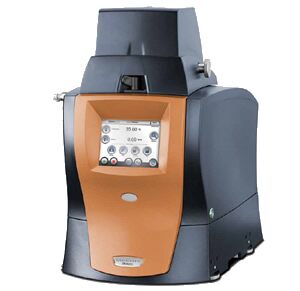
Q800 DMA has been replaced by the DMA 850
The Q800 has been replaced by the DMA 850 – The world’s most powerful platform for mechanical measurements.
Details

The Q800 has been replaced by the DMA 850 – The world’s most powerful platform for mechanical measurements.
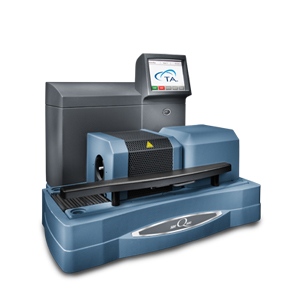
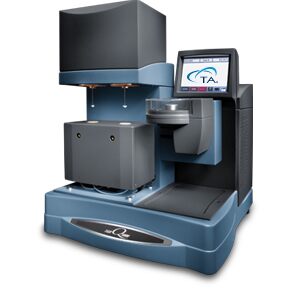
DetailsThis product is no longer available. You may be interested in our Other Instruments. We also encourage to you Contact Us so we can discuss your application and help you determine the solution that best meets your needs. Q800 DMA Utilizes state-of-the-art, non-contact, linear drive technology to provide precise control of stress, and air bearings for low friction…
DetailsQ Series Trade-In The Q Series™ instruments will enter their End-of-Life at the end 2024. Repair and maintenance will be done on “best-effort” after 2024. However, it should be noted that our ability to make these repairs is subject to availability of parts. In the attempt to facilitate the transition to the current Discovery Series,…
DetailsSimultaneous Thermal Analyzers measure both heat flow & weight changes in a material as a function of temperature (or time) under a controlled atmosphere
A simultaneous DSC-TGA can be used in a phases of research, quality control, and manufacturing operations. TA Instruments offers the Q600 for DSC-TGA measurements up to 1500°C.
DetailsQ Series Trade-In The Q Series™ instruments will enter their End-of-Life at the end 2024. Repair and maintenance will be done on “best-effort” after 2024. However, it should be noted that our ability to make these repairs is subject to availability of parts. In the attempt to facilitate the transition to the current Discovery Series,…
DetailsQ Series Trade-In The Q Series™ instruments will enter their End-of-Life at the end 2024. Repair and maintenance will be done on “best-effort” after 2024. However, it should be noted that our ability to make these repairs is subject to availability of parts. In the attempt to facilitate the transition to the current Discovery Series,…
DetailsThe new automated Q5000 SA is designed for high performance sorption analysis of materials under controlled conditions of temperature and humidity. Its design integrates our latest high sensitivity, temperature controlled thermobalance with an innovative humidity generation system, advanced multi-position autosampler, and powerful Advantage software with technique specific programs. The Q5000 SA delivers the performance and reliability required in a leading sorption analyzer and in a compact, user-friendly design.
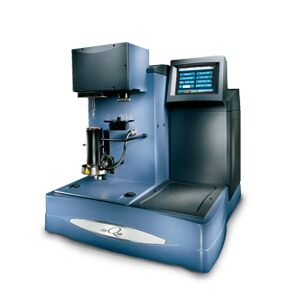
Details<< View all Thermogravimetric Analyzers Q500 TGA The Q500 is the world’s #1 selling, research-grade thermogravimetric analyzer. DescriptionSpecificationsVideoResources The Q500 is the world’s #1 selling, research-grade thermogravimetric analyzer. Its field-proven performance arises from a responsive low-mass furnace, ultra-sensitive thermobalance, and efficient horizontal purge gas system (with mass flow control). Its convenience, expandability and powerful, results-oriented…
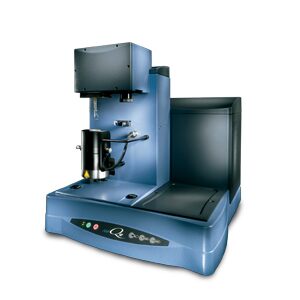
Details<< View all Thermogravimetric Analyzers Q50 TGA General purpose thermogravimetric analyzer that typically outperforms competitive research-grade models. DescriptionSpecificationsVideosResources The rugged, reliable, and cost-effective Q50 TGA, with many features of the Q500, offers exceptional value as a compact, general purpose thermogravimetric analyzer that typically outperforms competitive research-grade models. Its integral mass flow control, gas switching capability, superb…
Details