Quality Control of Advanced Materials with Thermal Analysis
As the market for advanced materials continues to grow, thermal analysis becomes increasingly critical for efficient, reliable quality assurance of innovative materials.
DetailsAs the market for advanced materials continues to grow, thermal analysis becomes increasingly critical for efficient, reliable quality assurance of innovative materials.
DetailsInnovation in materials science is a continuous pursuit, driven by the demand for lighter, stronger, more durable, and more reliable components. This is especially critical in the aerospace and defense industries, where materials must perform reliably under extreme conditions—including intense mechanical stress, wide temperature fluctuations, and long-term environmental exposure.
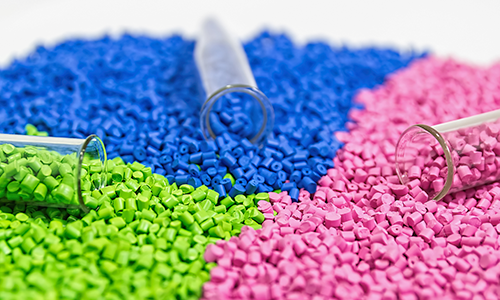
DetailsFrom fresh steak to new phones, the goods we buy are usually wrapped in one thing: plastic. And plastic dominates how we pack and store products for good reason – it is lightweight, cost-efficient, and durable. Plastic helps us transport and receive goods in perfect condition, thus reducing food waste and preventing damaged goods from heading to landfills.
DetailsThe composites market is evolving fast. Global market projections indicate a 10.8 % growth by 2028, driven by the demand for composites across industries looking for materials with superior performance at reduced weight and cost. This blog explores how advanced material analysis can enhance R&D and manufacturing processes in the composites market, ultimately leading to financial savings and increased efficiency.
DetailsAs electronic devices grow more powerful and compact, thermal management has become a critical design challenge. Central to this challenge are Thermal Interface Materials (TIMs)—specialized materials engineered to enhance heat transfer between high-power electronic components and heat-dissipating surfaces.
DetailsCatalytic reactions are everywhere: from plastics and bread to over 90% of all chemicals worldwide, countless goods and materials are manufactured with the aid of catalysts.1 Catalysts are substances that speed up sluggish chemical reactions. Faster reactions are more technologically and economically competitive. Furthermore, optimized catalysts offer a huge potential to reduce energy and resource consumption and lower carbon dioxide emissions.
DetailsBiological macromolecules are fundamental components of every cell and are therefore essential for all life. These vital molecules are categorized into four major classes: carbohydrates, lipids, proteins, and nucleic acids. Characterizing biological macromolecules is important for understanding their functions and relationships, which empowers the development of new therapies and treatments. Under this branch of macromolecule research, biotherapeutic drug therapy focuses on macromolecular interactions which can lead to disease and/or cell death.
DetailsPolymers are everywhere, from components making up the electronic device you’re reading this on to life-saving medical devices, energy efficient solar panels, and lightweight aero or auto components. Material scientists and engineers continue to improve high-performance polymers for strength, durability, and stability under demanding applications.
DetailsWe expect a lot from our composites: rocket materials need to endure the heat of takeoff, wind turbines must withstand high wind gusts, and sneakers are expected to be durable and supportive on long runs. How do experts develop composites tailored to such specific uses and verify their properties?
DetailsWhat are bioplastics? How can plastic manufacturers use them to improve the environmental impact of their products? With so many emerging green technologies, producers and consumers need to differentiate between greenwashing1 and genuine advancements. Furthermore, if a new development is deemed environmentally beneficial, all stages of the plastics supply chain, especially converters, must then learn how to incorporate the new technology without undermining their process or products.
DetailsLyophilization, also called freeze-drying, is the process of removing water from a sample, often for preservation. Lyophilization involves the sublimation of a sample’s water content, usually through a rapid freezing process. Freezing materials quickly helps avoid the destruction of the cell walls in the sample from the formation of large ice crystals.
Details3D printing, also known as additive manufacturing, is being embraced as a versatile manufacturing technique across diverse industries. 3D printing allows for rapid prototyping and print-on-demand solutions to avoid the potential waste associated with batch runs.
Details