View allAdhesives & SealantsAerospace / MilitaryAerospace, Military, & DefenseApplication NotesApplicationsArchiveARES G2 AccessoriesARES RheometerAutomated Density TesterAutomated Hardness TesterBatteriesBatteries & Battery MaterialsBatteriesBiopharmaBiopharmaceuticalsBlog ApplicationsBlog Techniquescardiovascular instrumentsCase StudiesCeramicsCompositesCompositesDHR AccessoriesDifferential Scanning CalorimetersDifferential Scanning CalorimetryDIL 830 SeriesDilatometersDilatometryDilatometryDilatometryDiscovery Hybrid RheometersDraftsDynamic Mechanical Analysis (DMA)Dynamic Mechanical AnalyzersDynamic Mechanical Analyzers (DMA)Dynamic Mechanical Analyzers (Rheology)Dynamic Mechanical Analyzers (Thermal Analysis)ElastomersElectroForceElectroForceElectroForce NotesElectroForceElectroForceElectroForceElectronic Materials & ProductsElectronicsEnd of Life ProductsEngineered MaterialsFine & Specialty ChemicalsFlash Diffusivity SystemsFlash DiffusivityFlash DiffusivityFood ProductsGeneralGlass ProductsGuarded heat flow meterHeating MicroscopesHigh Pressure AnalyzersHigh Throughput DSCHorizontal DilatometersIn-Person TrainingInorganics - OtherInorganics - MineralsInsulation & Building MaterialsIsothermal CalorimetryIsothermal Titration CalorimetryLaser FlashLoad frame systemsMaterial CharacterizationMechanical TestingMechanical TestingMedical Device TestingMedical DevicesMedical DevicesMetals ProductsMicrocalorimetryMicrocalorimetryMicrocalorimetryMicrocalorimetryMicrocalorimetry NotesMicrocalorimetryMooney ViscometerMoving Die RheometerMulti-Specimen FatigueNews & InfoOils, Lubricants, & FluidsOptical DilatometersOptical FleximeterOrganic Chemicals & ProductsPaints, Inks, & CoatingsPaints, Inks, & CoatingsPercarbonatesPersonal Care & Household ProductsPetroleum ProductsPharmaceuticalsPharmaceuticalsPolymersPolymersprivateProduct videosProductsPromotionsQ SeriesQuenching DilatometersQuick start guidesRheologyRheologyRheologyRheology AccessoryRheologyRheology NotesRheologyRotational ViscometerRubberRubber AccessoriesRubberRubber Process AnalyzersRubberRubber TestingRubber TestingRubber TestingRubothermSeminarsService VideosSimultaneous Thermal AnalyzerSoftwareSoftware Downloads SupportSoftwareSupportTA Quick Talk VideosTech TipsTestbench and Planar Biaxial systemsTGA AccessoriesThermal AnalysisThermal AnalysisThermal AnalysisThermal Analysis NotesThermal AnalysisThermal ApplicationsThermal ConductivityThermal Conductivity & DiffusivityThermal Conductivity MeterThermal ConductivityThermal ConductivityThermogravimetric AnalysisThermomechanical AnalyzersThermophysical NotesThermophysical Properties NotesTrainingUncategorizedVapor Sorption AnalysisVertical DilatometersVideosDilatometryWebinarsMicrocalorimetryRheologyRubberThermal AnalysisXenon Flash

4 Characteristics of Real High-Force DMA and Why They Matter

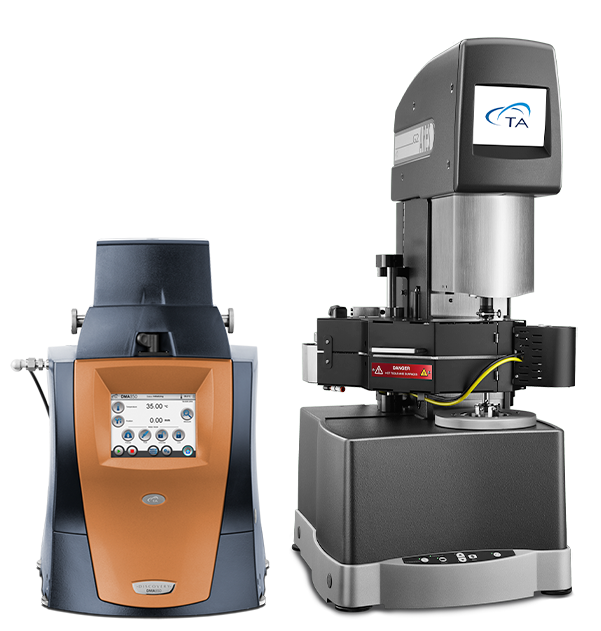
While many instruments can measure DMA type properties (phase, tan delta, etc), many are not performing ‘real’ DMA experiments. On the surface, Dynamic Mechanical Analysis seems straightforward: apply periodic stress/strain and measure the sample’s mechanical response including the phase relationship, revealing characteristics like stiffness (storage modulus) and damping (loss modulus).

Details

Advancing Aerospace and Defense Innovation: TA Instruments’ Material Characterization Portfolio

Innovation in materials science is a continuous pursuit, driven by the demand for lighter, stronger, more durable, and more reliable components. This is especially critical in the aerospace and defense industries, where materials must perform reliably under extreme conditions—including intense mechanical stress, wide temperature fluctuations, and long-term environmental exposure.

Details

Applying Dynamic Mechanical Analysis (DMA) to Test the Durability of Protective Sports Equipment

There is a renewed interest in the durability of protective sports equipment after Patrick Mahomes’ helmet recently cracked apart in -4 degrees Fahrenheit (-20 degrees Celsius) weather. Scientists from TA Instruments ran tests to find out if materials found in protective sports equipment can break due to cold weather.

Details

Dynamic Mechanical Analysis – Materials to Final Products

From plastic for medical devices to rubber for tires, the materials we use must meet increasingly high demands. Product manufacturers and consumers expect their materials to look good, perform well, and cost less, all while being environmentally friendly. Fulfilling all these expectations requires deep understanding of material behavior from the molecular level to real world mechanical properties. Since there are many factors that affect the properties of materials, precise measurement tools and methods are required to ensure that materials fulfill the high expectations of our world. A key measurement and analysis method to evaluate the properties of materials at various stages of development and production is Dynamic Mechanical Analysis (DMA).

Details

How to Accelerate Product Development with Easy, Reliable Advanced Mechanical Testing

Mechanical testing supports material and product innovation across a variety of industries and applications, from testing the long-term durability of dental implants during chewing to predicting how a car part will bend during an accident. Learn how the latest technology advances mechanical testing to better support cutting-edge product development.

Details

Linear Viscoelastic Region: Why It’s Crucial in Materials Testing

Our world is brimming with viscoelastic materials: The dough you knead before baking a fresh loaf, the Silly Putty your toddler slaps against the wall, the rubber gaskets that create an airtight seal on an airplane door. Testing those materials by applying controlled deformations (strains) or forces (stresses) at various timescales, temperatures, and/or humidities allows for the optimization of properties and ensures durability and safety.

Details

Material Analysis for Bioplastics Quality Assurance and Degradation

What are bioplastics? How can plastic manufacturers use them to improve the environmental impact of their products? With so many emerging green technologies, producers and consumers need to differentiate between greenwashing1 and genuine advancements. Furthermore, if a new development is deemed environmentally beneficial, all stages of the plastics supply chain, especially converters, must then learn how to incorporate the new technology without undermining their process or products.

Details