View allAdhesives & SealantsAerospace / MilitaryAerospace, Military, & DefenseApplication NotesApplicationsArchiveARES AccessoriesARES RheometerAutomated Density TesterAutomated Hardness TesterBatteriesBatteries & Battery MaterialsBatteriesBiopharmaBiopharmaceuticalsBlog ApplicationsBlog Techniquescardiovascular instrumentsCase StudiesCeramicsCompositesCompositesDHR AccessoriesDifferential Scanning CalorimetersDifferential Scanning CalorimetryDIL 830 SeriesDilatometersDilatometryDilatometryDilatometryDiscovery Hybrid RheometersDraftsDynamic Mechanical Analysis (DMA)Dynamic Mechanical AnalyzersDynamic Mechanical Analyzers (DMA)Dynamic Mechanical Analyzers (Rheology)Dynamic Mechanical Analyzers (Thermal Analysis)ElastomersElectroForceElectroForceElectroForce NotesElectroForceElectroForceElectroForceElectronic Materials & ProductsElectronicsEnd of Life ProductsEngineered MaterialsFine & Specialty ChemicalsFlash Diffusivity SystemsFlash DiffusivityFlash DiffusivityFood ProductsGeneralGlass ProductsGuarded heat flow meterHeating MicroscopesHigh Pressure AnalyzersHigh Throughput DSCHorizontal DilatometersIn-Person TrainingInorganics - OtherInorganics - MineralsInsulation & Building MaterialsIsothermal CalorimetryIsothermal Titration CalorimetryLaser FlashLoad frame systemsMaterial CharacterizationMechanical TestingMechanical TestingMedical Device TestingMedical DevicesMedical DevicesMetals ProductsMicrocalorimetryMicrocalorimetryMicrocalorimetryMicrocalorimetryMicrocalorimetry NotesMicrocalorimetryMooney ViscometerMoving Die RheometerMulti-Specimen FatigueNews & InfoOils, Lubricants, & FluidsOptical DilatometersOptical FleximeterOrganic Chemicals & ProductsPaints, Inks, & CoatingsPaints, Inks, & CoatingsPercarbonatesPersonal Care & Household ProductsPetroleum ProductsPharmaceuticalsPharmaceuticalsPolymersPolymersprivateProduct videosProductsPromotionsQ SeriesQuenching DilatometersQuick start guidesRheologyRheologyRheologyRheology AccessoryRheologyRheology NotesRheologyRotational ViscometerRubberRubber AccessoriesRubberRubber Process AnalyzersRubberRubber TestingRubber TestingRubber TestingRubothermSeminarsService VideosSimultaneous Thermal AnalyzerSoftwareSoftware Downloads SupportSoftwareSupportTA Quick Talk VideosTech TipsTestbench and Planar Biaxial systemsTGA AccessoriesThermal AnalysisThermal AnalysisThermal AnalysisThermal Analysis NotesThermal AnalysisThermal ApplicationsThermal ConductivityThermal Conductivity & DiffusivityThermal Conductivity MeterThermal ConductivityThermal ConductivityThermogravimetric AnalysisThermomechanical AnalyzersThermophysical NotesThermophysical Properties NotesTrainingUncategorizedVapor Sorption AnalysisVertical DilatometersVideosDilatometryWebinarsMicrocalorimetryRheologyRubberThermal AnalysisXenon Flash

What is Time Temperature Superposition, and Why is it Useful?

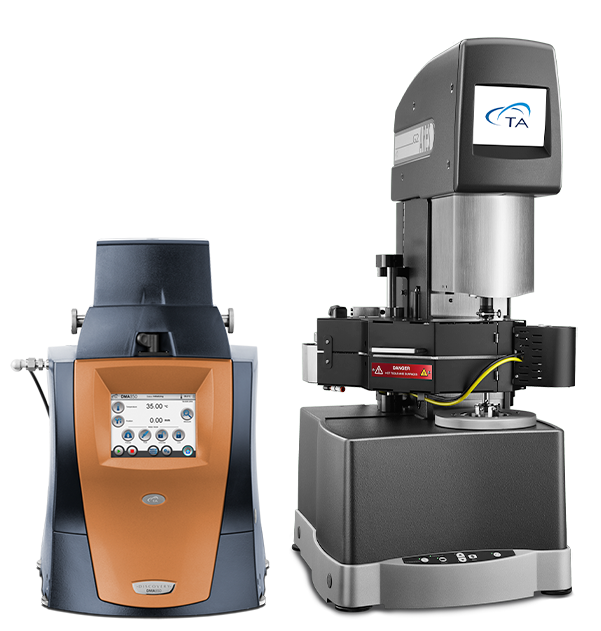
Developing high-performance materials for demanding applications requires predicting their behavior over a wide range of time scales. Rheology and DMA are powerful tools to understand and predict viscoelastic behavior, including how materials will respond to sudden forces or years of continuous use.

Details

What is Thermogravimetric Analysis?

A testament to the march of scientific inquiry, thermogravimetry emerged through the integration of three individual inventions in the 19th and 20th centuries: the electric furnace, the thermocouple, and the microbalance. As a cornerstone of material science, chemistry, and various other industries, thermogravimetric analysis (TGA) has since developed in leaps and bounds. Today, TA Instruments are leading the way in TGA, and we welcome you to join us as we explore the workings and applications of this groundbreaking technique.

Details

Understanding Storage and Loss Modulus with TA Instruments

In the world of material science, understanding the viscoelastic properties of materials is crucial for developing and optimizing products. Two key parameters in this context are storage modulus (E’ or G’) and loss modulus (E” or G”). These parameters provide insights into a material’s stiffness and damping characteristics, respectively, which are essential for applications ranging from polymers and pharmaceuticals to batteries and composites.

Details

The Importance of Fatigue Testing: Prevent Product Failures Early

From faster prototyping to ensuring long-term performance, fatigue testing is a critical step in product development across a variety of industries that rely on high-performance materials, like polymers, rubber compounds, and composites. When done properly, fatigue testing accelerates development by helping engineers make informed decisions about prototypes and designs.

Details

Stronger, Lighter, Faster: Lightweighting in Aerospace Engineering with Material Characterization

The aerospace industry is embracing a growing trend toward lightweighting: using lower density materials without sacrificing mechanical strength, durability, or performance. Lightweighting offers numerous benefits, including accelerated production speed, increased energy efficiency, and improved recyclability.

Details

Precision Testing for Energetic Materials and Propellants: How TA Instruments Powers Safety, Stability, and Performance

Innovation in materials science is a continuous pursuit, driven by the demand for lighter, stronger, more durable, and more reliable components. This is especially critical in the aerospace and defense industries, where materials must perform reliably under extreme conditions—including intense mechanical stress, wide temperature fluctuations, and long-term environmental exposure.

Details

Overcoming Composites R&D Challenges with Material Analysis

The composites market is evolving fast. Global market projections indicate a 10.8 % growth by 2028, driven by the demand for composites across industries looking for materials with superior performance at reduced weight and cost. This blog explores how advanced material analysis can enhance R&D and manufacturing processes in the composites market, ultimately leading to financial savings and increased efficiency.

Details