

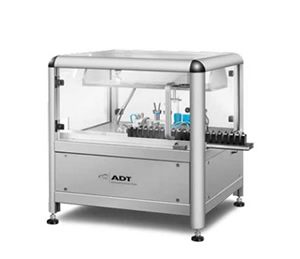
Automated Density Tester
Density testing is made simple with the TA Instruments fully Automated Density Tester.
Sales PromotionsDensity testing is made simple with the TA Instruments fully Automated Density Tester. This fully programmable, automated system measures the density of cured rubber materials using the finite difference (buoyancy) method. Active measurement of the fluid temperature increases accuracy by accounting for small changes in the density of the immersion fluid with temperature.
| Test Method | Finite Difference (buoyancy) ISO 2781 ASTM D1817 |
|
Sample diameter |
30 – 45 mm |
|
Sample thickness |
3 – 6 mm |
|
Measurement range |
< 1.0 g/cm3 to 2.5 g/cm3 |
|
Autosampler capacity |
20 |
|
Fluid Temperature Measurements |
Standard |
PRECISION DENSITY MEASUREMENT
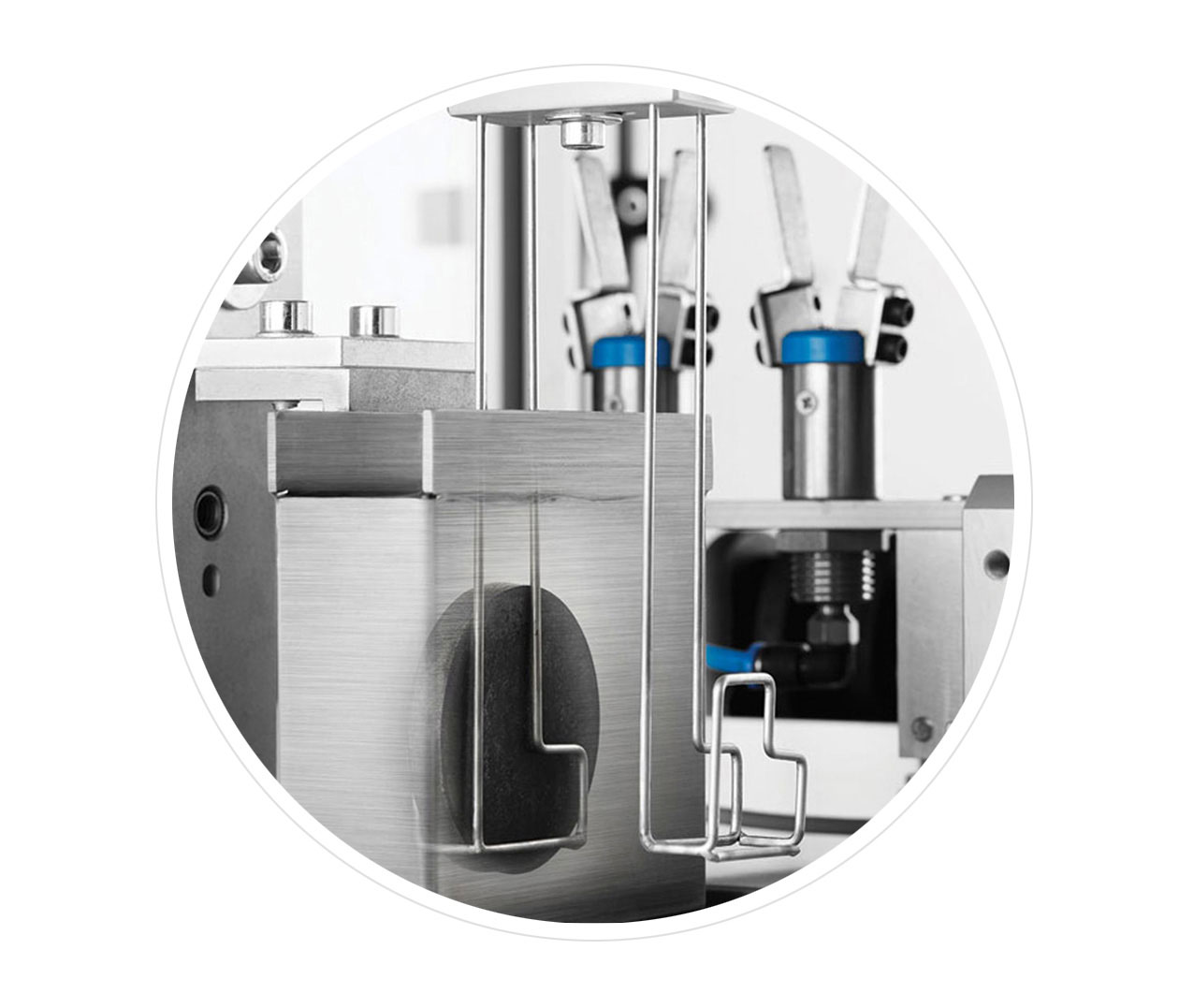
The finite difference method for density measurement relies on the measurement of sample weight dry, and immersed in a fluid, usually water. The difference between the dry and immersed weight is used with the known density of the fluid to calculate the volume of the specimen to a high degree of accuracy, irrespective of geometry.
A double gripper and carriage system is used to guarantee that dry weight values are entirely uninfluenced by system moisture or cross-contamination. Each sample is fully wetted by a user-defined number of separate immersions prior to immersed-mass measurement. This prevents error brought about by incomplete wetting and improves both accuracy and precision.
WALK-AWAY AUTOMATION

Sequential, reliable, and unattended density measurements are made using an automatically fed sample tray with 20 or 30 sample capacity. This true walk-away automation is enhanced with software- driven test set-up, data collection, and pass/fail criteria.
- Description
-
Density testing is made simple with the TA Instruments fully Automated Density Tester. This fully programmable, automated system measures the density of cured rubber materials using the finite difference (buoyancy) method. Active measurement of the fluid temperature increases accuracy by accounting for small changes in the density of the immersion fluid with temperature.
- Specifications
-
Test Method Finite Difference (buoyancy)
ISO 2781
ASTM D1817Sample diameter
30 – 45 mm
Sample thickness
3 – 6 mm
Measurement range
< 1.0 g/cm3 to 2.5 g/cm3
Autosampler capacity
20
30 (optional)Fluid Temperature Measurements
Standard
- Technology
-
PRECISION DENSITY MEASUREMENT
The finite difference method for density measurement relies on the measurement of sample weight dry, and immersed in a fluid, usually water. The difference between the dry and immersed weight is used with the known density of the fluid to calculate the volume of the specimen to a high degree of accuracy, irrespective of geometry.
A double gripper and carriage system is used to guarantee that dry weight values are entirely uninfluenced by system moisture or cross-contamination. Each sample is fully wetted by a user-defined number of separate immersions prior to immersed-mass measurement. This prevents error brought about by incomplete wetting and improves both accuracy and precision.
- Automation Options
-
WALK-AWAY AUTOMATION
Sequential, reliable, and unattended density measurements are made using an automatically fed sample tray with 20 or 30 sample capacity. This true walk-away automation is enhanced with software- driven test set-up, data collection, and pass/fail criteria.
- Videos
-