Behind The Bounce: The Mechanical Properties of Your Tennis Ball
Tennis players of all levels know that the right ball can make or break your game. But how do different balls compare, and how can manufacturers reliably measure these differences?
When it comes to selecting materials for your next innovative product, the material specification sheet is likely the first place that you will turn. This document provides core properties measured by the manufacturer and serves as an essential tool for supplier verification and new product development. However, while these sheets are reliable and provide a standard method for comparison, they often fail to tell the whole story.
Our world is brimming with viscoelastic materials: The dough you knead before baking a fresh loaf, the Silly Putty your toddler slaps against the wall, the rubber gaskets that create an airtight seal on an airplane door. Testing those materials by applying controlled deformations (strains) or forces (stresses) at various timescales, temperatures, and/or humidities allows for the optimization of properties and ensures durability and safety.
The composites market is evolving fast. Global market projections indicate a 10.8 % growth by 2028, driven by the demand for composites across industries looking for materials with superior performance at reduced weight and cost. This blog explores how advanced material analysis can enhance R&D and manufacturing processes in the composites market, ultimately leading to financial savings and increased efficiency.
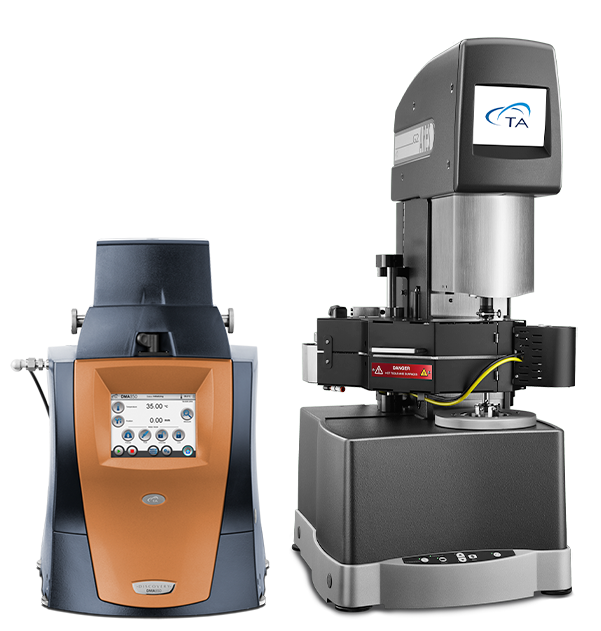
Dynamic Mechanical Analysis (DMA) is a thermal analysis technique used to measure the mechanical properties of materials as they are deformed under periodic stress. DMA is commonly used to determine the viscoelastic behavior of polymers, composites, and other materials.
High-performance polymers are a critical material for manufacturers due to their combination of mechanical, thermal, and chemical properties, but especially their cost. Without adequate testing, manufacturers could run into a slew of issues, from immediate product failure to poor performance or failure after some time in usage.
From material selection and failure analysis to end-use application, Dynamic Mechanical Analysis (DMA) offers crucial polymer insights. Polymer scientists and design engineers pair DMA with fatigue testing to gain a complete view of their material’s properties and performance attributes.
We expect a lot from our composites: rocket materials need to endure the heat of takeoff, wind turbines must withstand high wind gusts, and sneakers are expected to be durable and supportive on long runs. How do experts develop composites tailored to such specific uses and verify their properties?
Do your patients worry about their replacement hip breaking when they run? Or how long their prosthetic leg will last before needing a new one? Are your regulatory submissions requiring increasingly more lifetime testing?
What are bioplastics? How can plastic manufacturers use them to improve the environmental impact of their products? With so many emerging green technologies, producers and consumers need to differentiate between greenwashing1 and genuine advancements. Furthermore, if a new development is deemed environmentally beneficial, all stages of the plastics supply chain, especially converters, must then learn how to incorporate the new technology without undermining their process or products.
From plastic for medical devices to rubber for tires, the materials we use must meet increasingly high demands. Product manufacturers and consumers expect their materials to look good, perform well, and cost less, all while being environmentally friendly. Fulfilling all these expectations requires deep understanding of material behavior from the molecular level to real world mechanical properties. Since there are many factors that affect the properties of materials, precise measurement tools and methods are required to ensure that materials fulfill the high expectations of our world. A key measurement and analysis method to evaluate the properties of materials at various stages of development and production is Dynamic Mechanical Analysis (DMA).