Thermal Analysis of Heat Shrink Tubing
Heat shrink tubing appears simple at first glance: wrap it around your wires, apply a heat gun, and voila – perfectly insulated wires every time. But these tubes are more complex than they seem.
If you’re working with materials that can be flowed, for example within pharmaceutical, food, cosmetics, or petrochemical industries, it’s likely that there is a viscometer in the laboratory that is the go-to instrument for formulation testing or QA purposes. However, does this viscometer give you the whole picture and fully meet all your needs?
When it comes to selecting materials for your next innovative product, the material specification sheet is likely the first place that you will turn. This document provides core properties measured by the manufacturer and serves as an essential tool for supplier verification and new product development. However, while these sheets are reliable and provide a standard method for comparison, they often fail to tell the whole story.
Our world is brimming with viscoelastic materials: The dough you knead before baking a fresh loaf, the Silly Putty your toddler slaps against the wall, the rubber gaskets that create an airtight seal on an airplane door. Testing those materials by applying controlled deformations (strains) or forces (stresses) at various timescales, temperatures, and/or humidities allows for the optimization of properties and ensures durability and safety.
High-performance polymers are a critical material for manufacturers due to their combination of mechanical, thermal, and chemical properties, but especially their cost. Without adequate testing, manufacturers could run into a slew of issues, from immediate product failure to poor performance or failure after some time in usage.
Against the backdrop of a plastic waste crisis, the global demand for plastic is set to quadruple by 2060. This has driven a shift toward sustainability and away from linear use models of plastic production. Post-consumer resin (PCR) has emerged as a key player in circular economy initiatives, though ensuring the quality and performance of PCR requires several characterization considerations.
From material selection and failure analysis to end-use application, Dynamic Mechanical Analysis (DMA) offers crucial polymer insights. Polymer scientists and design engineers pair DMA with fatigue testing to gain a complete view of their material’s properties and performance attributes.
Saving time in polymer research has many benefits and can be realized in different ways, from reducing operator training time to increasing research throughput and achieving accurate and reproducible results. Here are 3 opportunities across 3 techniques (rheology, TGA, and DSC) which offer solutions to save time in your polymer research.
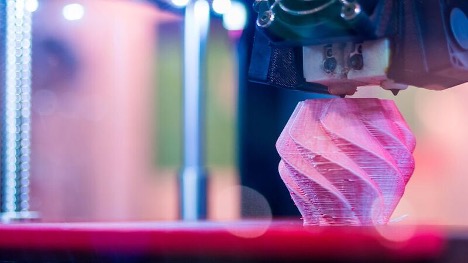
Successful additive manufacturing products depend upon your materials’ properties and behaviors. Rheology provides valuable information for safe, efficient, and reproducible polymer manufacturing.
Technology is rapidly advancing. Whether you upgrade old equipment or add a new technique to your bench, using cutting-edge instrumentation is sure to enhance your lab’s efficiency and results. Today’s instruments offer more reliable data and advanced features, both of which are crucial for staying at the forefront of material innovation.
Hydrogels are three-dimensional porous strctures that can absorb large amounts of water. They can be made up of polymers, protein, peptides, colloids, surfactants, or lipids.1 Hydrogels’ ability to uptake large amounts of water is useful for many biological applications, including drug delivery and tissue engineering. Since a hydrogels’ properties change as it absorbs water, scientists must accurately characterize its behavior at different saturation amounts and in varying conditions.
3D printing, also known as additive manufacturing, is being embraced as a versatile manufacturing technique across diverse industries. 3D printing allows for rapid prototyping and print-on-demand solutions to avoid the potential waste associated with batch runs.