Behind The Bounce: The Mechanical Properties of Your Tennis Ball
Tennis players of all levels know that the right ball can make or break your game. But how do different balls compare, and how can manufacturers reliably measure these differences?
When it comes to selecting materials for your next innovative product, the material specification sheet is likely the first place that you will turn. This document provides core properties measured by the manufacturer and serves as an essential tool for supplier verification and new product development. However, while these sheets are reliable and provide a standard method for comparison, they often fail to tell the whole story.
Our world is brimming with viscoelastic materials: The dough you knead before baking a fresh loaf, the Silly Putty your toddler slaps against the wall, the rubber gaskets that create an airtight seal on an airplane door. Testing those materials by applying controlled deformations (strains) or forces (stresses) at various timescales, temperatures, and/or humidities allows for the optimization of properties and ensures durability and safety.
The composites market is evolving fast. Global market projections indicate a 10.8 % growth by 2028, driven by the demand for composites across industries looking for materials with superior performance at reduced weight and cost. This blog explores how advanced material analysis can enhance R&D and manufacturing processes in the composites market, ultimately leading to financial savings and increased efficiency.
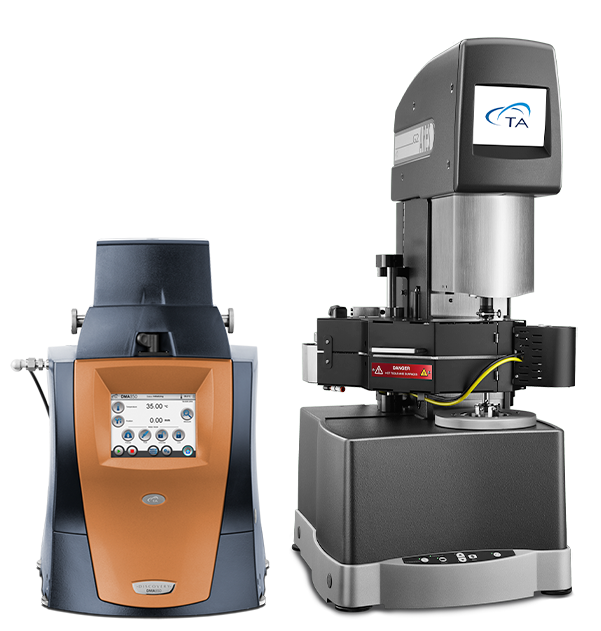
Dynamic Mechanical Analysis (DMA) is a thermal analysis technique used to measure the mechanical properties of materials as they are deformed under periodic stress. DMA is commonly used to determine the viscoelastic behavior of polymers, composites, and other materials.
High-performance polymers are a critical material for manufacturers due to their combination of mechanical, thermal, and chemical properties, but especially their cost. Without adequate testing, manufacturers could run into a slew of issues, from immediate product failure to poor performance or failure after some time in usage.
From material selection and failure analysis to end-use application, Dynamic Mechanical Analysis (DMA) offers crucial polymer insights. Polymer scientists and design engineers pair DMA with fatigue testing to gain a complete view of their material’s properties and performance attributes.
Wir erwarten eine ganze Menge von unseren Verbundwerkstoffen: Baumaterialien für Raketen müssen die extreme Wärmeentwicklung beim Start verkraften, Windturbinen müssen starken Böen standhalten und Sportschuhe sollen strapazierbar sein und den Fuß über lange Strecken stützen. Wie entwickeln die Experten solche Verbundwerkstoffe für ganz bestimmte Anwendungsbereiche, und wie überprüfen sie die Materialeigenschaften?
Machen sich Ihre Patienten Sorgen, ob ihr Hüftersatz beim Rennen brechen könnte? Oder wie lange die Beinprothese hält, bis eine neue erforderlich ist? Sind für die Einreichungen bei Zulassungsbehörden immer mehr Tests der Lebenszeit erforderlich?
Was ist Biokunststoff? Wie können Hersteller thermische Analyse, Rheologie und mechanische Analyse nutzen, um Biokunststoffe erfolgreich in Produkte einzuarbeiten? Angesichts vieler aufkommender grüner Technologien müssen Hersteller und Verbraucher zwischen Greenwashing1 und wirklichem Fortschritt unterscheiden. Wenn eine neue Entwicklung als vorteilhaft für die Umwelt betrachtet wird, müssen alle Phasen der Kunststoff-Lieferkette, insbesondere die Umformung von Kunststoffen durch Converter, lernen, neue Technologien anzuwenden, ohne deren Prozesse oder Produkte zu beschädigen.
Von Kunststoffen für medizinische Geräte bis hin zu Gummi für Reifen – die von uns verwendeten Materialien müssen immer höheren Anforderungen genügen. Produkthersteller und Verbraucher:innen erwarten von ihren Materialien, dass sie gut aussehen, gut funktionieren, wenig kosten und gleichzeitig umweltfreundlich sind. Um all diese Erwartungen zu erfüllen, ist ein tiefes Verständnis des Materialverhaltens von der molekularen Ebene bis hin zu den realen mechanischen Eigenschaften erforderlich. Da es viele Faktoren gibt, die die Eigenschaften von Materialien beeinflussen, sind präzise Messinstrumente und -methoden erforderlich, um sicherzustellen, dass die Materialien die hohen Erwartungen unserer Welt erfüllen. Eine wichtige Mess- und Analysemethode zur Bewertung der Eigenschaften von Materialien in verschiedenen Entwicklungs- und Produktionsstadien ist die dynamisch-mechanische Analyse (DMA).