Thermal Analysis of Heat Shrink Tubing
Heat shrink tubing appears simple at first glance: wrap it around your wires, apply a heat gun, and voila – perfectly insulated wires every time. But these tubes are more complex than they seem.
If you’re working with materials that can be flowed, for example within pharmaceutical, food, cosmetics, or petrochemical industries, it’s likely that there is a viscometer in the laboratory that is the go-to instrument for formulation testing or QA purposes. However, does this viscometer give you the whole picture and fully meet all your needs?
When it comes to selecting materials for your next innovative product, the material specification sheet is likely the first place that you will turn. This document provides core properties measured by the manufacturer and serves as an essential tool for supplier verification and new product development. However, while these sheets are reliable and provide a standard method for comparison, they often fail to tell the whole story.
Our world is brimming with viscoelastic materials: The dough you knead before baking a fresh loaf, the Silly Putty your toddler slaps against the wall, the rubber gaskets that create an airtight seal on an airplane door. Testing those materials by applying controlled deformations (strains) or forces (stresses) at various timescales, temperatures, and/or humidities allows for the optimization of properties and ensures durability and safety.
High-performance polymers are a critical material for manufacturers due to their combination of mechanical, thermal, and chemical properties, but especially their cost. Without adequate testing, manufacturers could run into a slew of issues, from immediate product failure to poor performance or failure after some time in usage.
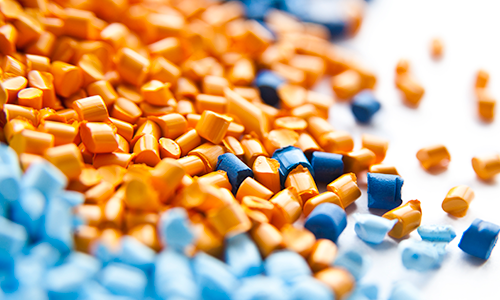
Against the backdrop of a plastic waste crisis, the global demand for plastic is set to quadruple by 2060. This has driven a shift toward sustainability and away from linear use models of plastic production. Post-consumer resin (PCR) has emerged as a key player in circular economy initiatives, though ensuring the quality and performance of PCR requires several characterization considerations.
From material selection and failure analysis to end-use application, Dynamic Mechanical Analysis (DMA) offers crucial polymer insights. Polymer scientists and design engineers pair DMA with fatigue testing to gain a complete view of their material’s properties and performance attributes.
Eine Zeitersparnis in der Polymerforschung bietet viele Vorteile und kann auf unterschiedliche Weise erreicht werden: von der Reduktion der Zeit für die Anwenderschulung über die Erhöhung des Forschungsdurchsatzes bis zum Erreichen präziser und reproduzierbarer Ergebnisse. Wir stellen Ihnen hier 3 Möglichkeiten für 3 Techniken (Rheologie, TGA und DSC) vor, die Ihnen Lösungen dazu an die Hand geben, wie Sie bei der Polymerforschung Zeit sparen können.
Ob im Spritzguss oder bei der Extrusion, ob im 3D-Druck oder anderer additiver Fertigungsverfahren – will man Polymerwerkstoffe sicher, effizient und reproduzierbar verarbeiten, spielt das Wissen um die Eigenschaften und das Verhalten der eingesetzten Materialien eine zentrale Rolle. Für den Verarbeitungs- und Herstellungsprozess wertvolle Informationen liefert die Rheologie.
Die Technologie schreitet rasch voran. Ganz gleich, ob Sie alte Geräte aufrüsten oder neue Verfahren an Ihrem Arbeitsplatz implementieren möchten: Der Einsatz hochmoderner Instrumente wird Effizienz und Ergebnisse Ihres Labors mit Sicherheit verbessern. Heutzutage bieten Geräte zuverlässigere Daten und fortschrittlichere Funktionen, und beides sind entscheidende Faktoren, um bei der Werkstoffinnovation führend zu bleiben.
Hydrogele sind dreidimensionale poröse Strukturen, die große Mengen Wasser absorbieren können. Sie können aus Polymeren, Proteinen, Peptiden, Kolloiden, Tensiden oder Lipiden zusammengesetzt sein.1 Die Fähigkeit von Hydrogelen, große Mengen Wasser aufzunehmen, ist bei vielen biologischen Applikationen nützlich, einschließlich Arzneimittelabgabe (Drug Delivery) und Gewebezüchtung. Da sich die Eigenschaften von Hydrogelen während der Wasseraufnahme ändern, müssen Wissenschaftler deren Verhalten bei verschiedenen Sättigungsmengen und unter verschiedenen Bedingungen genau charakterisieren.
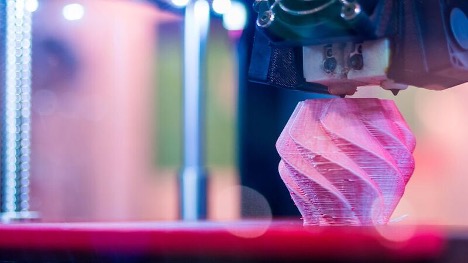
Der 3D-Druck, der auch als additive Fertigung bekannt ist, wird als vielseitiges Fertigungsverfahren in verschiedenen Branchen eingesetzt. Das 3D-Drucken ermöglicht eine schnelle Herstellung von Prototypen und Print-on-Demand-Lösungen, um den potenziellen Abfall zu vermeiden, der mit Serienproduktionen verbunden ist.