Behind The Bounce: The Mechanical Properties of Your Tennis Ball
Tennis players of all levels know that the right ball can make or break your game. But how do different balls compare, and how can manufacturers reliably measure these differences?
When it comes to selecting materials for your next innovative product, the material specification sheet is likely the first place that you will turn. This document provides core properties measured by the manufacturer and serves as an essential tool for supplier verification and new product development. However, while these sheets are reliable and provide a standard method for comparison, they often fail to tell the whole story.
Our world is brimming with viscoelastic materials: The dough you knead before baking a fresh loaf, the Silly Putty your toddler slaps against the wall, the rubber gaskets that create an airtight seal on an airplane door. Testing those materials by applying controlled deformations (strains) or forces (stresses) at various timescales, temperatures, and/or humidities allows for the optimization of properties and ensures durability and safety.
The composites market is evolving fast. Global market projections indicate a 10.8 % growth by 2028, driven by the demand for composites across industries looking for materials with superior performance at reduced weight and cost. This blog explores how advanced material analysis can enhance R&D and manufacturing processes in the composites market, ultimately leading to financial savings and increased efficiency.
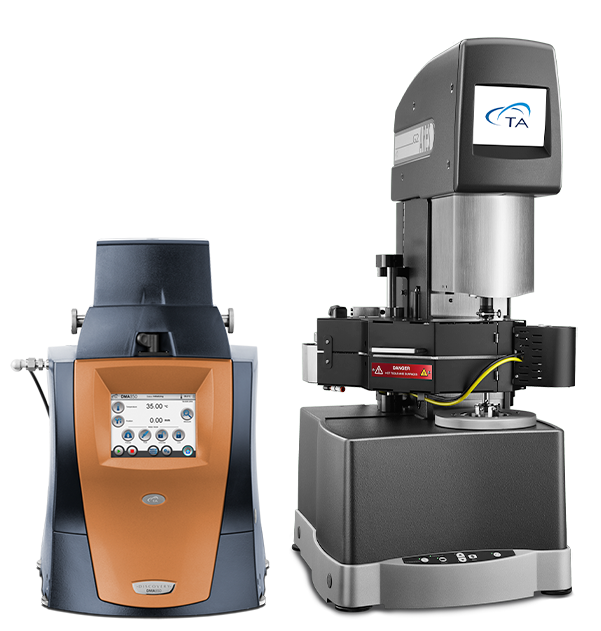
Dynamic Mechanical Analysis (DMA) is a thermal analysis technique used to measure the mechanical properties of materials as they are deformed under periodic stress. DMA is commonly used to determine the viscoelastic behavior of polymers, composites, and other materials.
High-performance polymers are a critical material for manufacturers due to their combination of mechanical, thermal, and chemical properties, but especially their cost. Without adequate testing, manufacturers could run into a slew of issues, from immediate product failure to poor performance or failure after some time in usage.
From material selection and failure analysis to end-use application, Dynamic Mechanical Analysis (DMA) offers crucial polymer insights. Polymer scientists and design engineers pair DMA with fatigue testing to gain a complete view of their material’s properties and performance attributes.
We expect a lot from our composites: rocket materials need to endure the heat of takeoff, wind turbines must withstand high wind gusts, and sneakers are expected to be durable and supportive on long runs. How do experts develop composites tailored to such specific uses and verify their properties?
환자들이 달리다가 고관절 대체물이 부러지는 것에 대해 걱정합니까? 또는 새 의족으로 바꿀 때까지 현재 의족이 얼마나 오래 갈지 걱정하나요? 규제 기관 제출을 위해 점점 더 많은 수명 테스트가 필요한가요?
바이오 플라스틱이란 무엇일까요? 플라스틱 제조사는 바이오 플라스틱을 어떻게 이용하여 제품의 환경 영향을 개선할까요? 너무나 많은 녹색기술이 대두하는 상황에서 생산자와 소비자는 위장 환경주의와1 실제 진보 사이를 구분해야 합니다. 그리고 새로운 발전이 환경에 이롭다고 생각된다면 플라스틱 공급망의 모든 단계에서, 특히 재활용 업체에서 공정이나 제품을 잠식하지 않는 신기술 도입 방법을 배워야 합니다.
의료 기기용 플라스틱에서 타이어용 고무에 이르기까지, 생산에 사용되는 재료에 요구되는 기준은 점점 더 높아지고 있습니다. 제품의 제조업체와 소비자는 보기에 좋고, 성능도 우수하며, 비용이 절감되는 동시에 환경에도 친화적인 재료를 원하고 있습니다. 이러한 모든 기대에 부응하기 위해서는 분자 수준에서 실제 기계적 특성에 이르기까지 재료의 거동에 대한 심도 있는 이해가 필요합니다. 수많은 요소가 재료의 특성에 영향을 미치므로 이처럼 높은 기대치를 충족시키는 재료를 확보하기 위해서는 정확한 측정 도구와 방법이 필요합니다. DMA(동적 기계적 분석)은 개발 및 생산의 다양한 단계에서 재료의 특성을 평가하기 위해 사용되는 주요 측정 및 분석 방법입니다.