Thermal Analysis of Heat Shrink Tubing
Heat shrink tubing appears simple at first glance: wrap it around your wires, apply a heat gun, and voila – perfectly insulated wires every time. But these tubes are more complex than they seem.
If you’re working with materials that can be flowed, for example within pharmaceutical, food, cosmetics, or petrochemical industries, it’s likely that there is a viscometer in the laboratory that is the go-to instrument for formulation testing or QA purposes. However, does this viscometer give you the whole picture and fully meet all your needs?
When it comes to selecting materials for your next innovative product, the material specification sheet is likely the first place that you will turn. This document provides core properties measured by the manufacturer and serves as an essential tool for supplier verification and new product development. However, while these sheets are reliable and provide a standard method for comparison, they often fail to tell the whole story.
Our world is brimming with viscoelastic materials: The dough you knead before baking a fresh loaf, the Silly Putty your toddler slaps against the wall, the rubber gaskets that create an airtight seal on an airplane door. Testing those materials by applying controlled deformations (strains) or forces (stresses) at various timescales, temperatures, and/or humidities allows for the optimization of properties and ensures durability and safety.
High-performance polymers are a critical material for manufacturers due to their combination of mechanical, thermal, and chemical properties, but especially their cost. Without adequate testing, manufacturers could run into a slew of issues, from immediate product failure to poor performance or failure after some time in usage.
Against the backdrop of a plastic waste crisis, the global demand for plastic is set to quadruple by 2060. This has driven a shift toward sustainability and away from linear use models of plastic production. Post-consumer resin (PCR) has emerged as a key player in circular economy initiatives, though ensuring the quality and performance of PCR requires several characterization considerations.
From material selection and failure analysis to end-use application, Dynamic Mechanical Analysis (DMA) offers crucial polymer insights. Polymer scientists and design engineers pair DMA with fatigue testing to gain a complete view of their material’s properties and performance attributes.
폴리머 연구에 소요되는 시간을 절약하면 작업자 교육 시간 단축 및 정확하며 재현 가능한 결과 확보와 같은 이점이 있으며, 다양한 방법으로 이를 실현할 수 있습니다. 3가지 기법(유변학, TGA, DSC)에 걸쳐 폴리머 연구에 소요되는 시간을 절약할 수 있는 3가지 기회가 있습니다.
Successful additive manufacturing products depend upon your materials’ properties and behaviors. Rheology provides valuable information for safe, efficient, and reproducible polymer manufacturing.
기술은 급격하게 발전하고 있습니다. 오래된 장비를 업그레이드하든, 벤치에 새로운 기술을 추가하든, 최첨단 장비를 사용하면 연구실의 효율성과 결과가 향상됩니다. 최신 기기는 보다 신뢰할 수 있는 데이터와 고급 기능을 제공하며, 이는 소재 혁신에서 선도적인 위치를 지키는 데 필수적입니다.
수화젤은 대량의 물을 흡수할 수 있는 3차원의 다공성 구조로 되어 있습니다. 수화젤은 폴리머, 단백질, 펩티드, 콜로이드, 표면활성제 또는 지질로 구성될 수 있습니다.1 수화젤은 대량의 물을 흡수하는 능력이 있어 약물 전달 및 조직 엔지니어링 등 많은 생물학적 응용분야에 유용합니다. 수화젤이 물을 흡수하면 그 성질이 변하기 때문에 과학자들은 다양한 포화량과 다양한 조건에서 수화젤의 행동을 정확하게 규명해야 합니다.
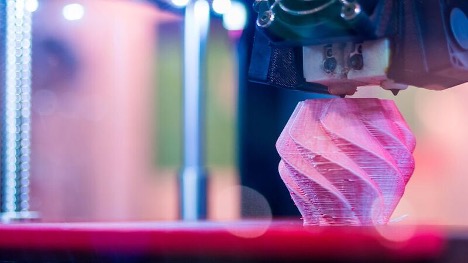
적층 제조라고 불리는 3D 프린팅은 다양한 산업 분야에 있어서 다목적의 제조 기술로 채택되고 있습니다. 3D 프린팅은 신속한 프로토타입 제작 및 주문형 프린팅 솔루션을 통한 배치 생산에 따른 잠재적 낭비를 막아줍니다.