Behind The Bounce: The Mechanical Properties of Your Tennis Ball
Tennis players of all levels know that the right ball can make or break your game. But how do different balls compare, and how can manufacturers reliably measure these differences?
When it comes to selecting materials for your next innovative product, the material specification sheet is likely the first place that you will turn. This document provides core properties measured by the manufacturer and serves as an essential tool for supplier verification and new product development. However, while these sheets are reliable and provide a standard method for comparison, they often fail to tell the whole story.
Our world is brimming with viscoelastic materials: The dough you knead before baking a fresh loaf, the Silly Putty your toddler slaps against the wall, the rubber gaskets that create an airtight seal on an airplane door. Testing those materials by applying controlled deformations (strains) or forces (stresses) at various timescales, temperatures, and/or humidities allows for the optimization of properties and ensures durability and safety.
The composites market is evolving fast. Global market projections indicate a 10.8 % growth by 2028, driven by the demand for composites across industries looking for materials with superior performance at reduced weight and cost. This blog explores how advanced material analysis can enhance R&D and manufacturing processes in the composites market, ultimately leading to financial savings and increased efficiency.
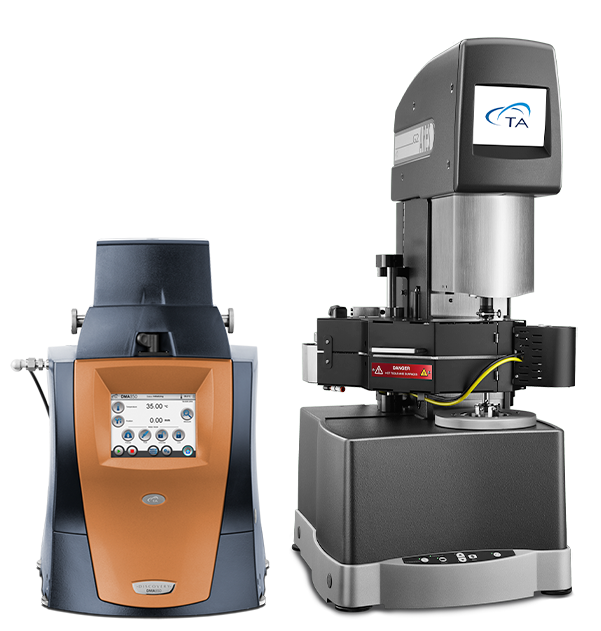
Dynamic Mechanical Analysis (DMA) is a thermal analysis technique used to measure the mechanical properties of materials as they are deformed under periodic stress. DMA is commonly used to determine the viscoelastic behavior of polymers, composites, and other materials.
High-performance polymers are a critical material for manufacturers due to their combination of mechanical, thermal, and chemical properties, but especially their cost. Without adequate testing, manufacturers could run into a slew of issues, from immediate product failure to poor performance or failure after some time in usage.
From material selection and failure analysis to end-use application, Dynamic Mechanical Analysis (DMA) offers crucial polymer insights. Polymer scientists and design engineers pair DMA with fatigue testing to gain a complete view of their material’s properties and performance attributes.
We expect a lot from our composites: rocket materials need to endure the heat of takeoff, wind turbines must withstand high wind gusts, and sneakers are expected to be durable and supportive on long runs. How do experts develop composites tailored to such specific uses and verify their properties?
您的患者是否擔心在跑步時,置換的髖關節發生骨折?或是他們的義足能使用多久?何時需更換新品?您是否需要提交越來越多有關使用壽命試驗的審查文件?
Qu’est-ce que les bioplastiques ? Comment les fabricants de plastique peuvent-ils les exploiter pour améliorer l’impact environnemental de leurs produits ? Étant donné le grand nombre de technologies vertes émergentes, les producteurs et les consommateurs doivent distinguer l’écoblanchiment1 des véritables avancées. En outre, si un nouveau développement est jugé avantageux pour l’environnement, toutes les étapes de la chaîne d’approvisionnement des plastiques, en particulier les transformateurs, devront alors trouver le moyen d’intégrer la nouvelle technologie sans compromettre leur processus ou leurs produits.
從醫療器材的塑膠到輪胎的橡膠,我們所使用的材料必須滿足越來越多的要求。產品製造商和消費者希望他們的物品好看,好用,便宜,還同時對環境友善。如果上述需求全部都要滿足,就必須從分子層級到實際世界的機械性能都要深入瞭解。由於影響材料特性的因素有很多,因此需要精確的測量工具和方法來確保材料滿足實際應用下的高期望值。在開發和生產的各個階段,評估材料特性的一個關鍵測量和分析方法正是動態機械分析(DMA)。