Thermal Analysis of Heat Shrink Tubing
Heat shrink tubing appears simple at first glance: wrap it around your wires, apply a heat gun, and voila – perfectly insulated wires every time. But these tubes are more complex than they seem.
If you’re working with materials that can be flowed, for example within pharmaceutical, food, cosmetics, or petrochemical industries, it’s likely that there is a viscometer in the laboratory that is the go-to instrument for formulation testing or QA purposes. However, does this viscometer give you the whole picture and fully meet all your needs?
When it comes to selecting materials for your next innovative product, the material specification sheet is likely the first place that you will turn. This document provides core properties measured by the manufacturer and serves as an essential tool for supplier verification and new product development. However, while these sheets are reliable and provide a standard method for comparison, they often fail to tell the whole story.
Our world is brimming with viscoelastic materials: The dough you knead before baking a fresh loaf, the Silly Putty your toddler slaps against the wall, the rubber gaskets that create an airtight seal on an airplane door. Testing those materials by applying controlled deformations (strains) or forces (stresses) at various timescales, temperatures, and/or humidities allows for the optimization of properties and ensures durability and safety.
High-performance polymers are a critical material for manufacturers due to their combination of mechanical, thermal, and chemical properties, but especially their cost. Without adequate testing, manufacturers could run into a slew of issues, from immediate product failure to poor performance or failure after some time in usage.
Against the backdrop of a plastic waste crisis, the global demand for plastic is set to quadruple by 2060. This has driven a shift toward sustainability and away from linear use models of plastic production. Post-consumer resin (PCR) has emerged as a key player in circular economy initiatives, though ensuring the quality and performance of PCR requires several characterization considerations.
From material selection and failure analysis to end-use application, Dynamic Mechanical Analysis (DMA) offers crucial polymer insights. Polymer scientists and design engineers pair DMA with fatigue testing to gain a complete view of their material’s properties and performance attributes.
El ahorro de tiempo en la investigación de polímeros tiene muchos beneficios y se puede lograr de diferentes maneras, desde reducir el tiempo de capacitación del operador hasta aumentar el rendimiento de la investigación y alcanzar resultados exactos y reproducibles. A continuación se presentan tres oportunidades entre tres técnicas (reología, analizador termogravimétrico [TGA, por sus siglas en inglés] y calorímetros de escaneo diferencial [DSC, por sus siglas en inglés]) que ofrecen soluciones para ahorrar tiempo en su investigación de polímeros.
Successful additive manufacturing products depend upon your materials’ properties and behaviors. Rheology provides valuable information for safe, efficient, and reproducible polymer manufacturing.
La tecnología está avanzando con rapidez. Ya sea que actualice equipo antiguo o agregue una nueva técnica a su mesa de trabajo, el uso de instrumentación de vanguardia sin duda mejorará la eficiencia y los resultados de su laboratorio. Los instrumentos actuales ofrecen datos más fiables y funciones avanzadas, ambos de los cuales son cruciales para permanecer a la vanguardia de la innovación de materiales.
Los hidrogeles son estructuras porosas tridimensionales que pueden absorber grandes cantidades de agua. Pueden estar compuestos de polímeros, proteínas, péptidos, coloides, surfactantes o lípidos.1 La capacidad de los hidrogeles para absorber grandes cantidades de agua es útil para muchas aplicaciones biológicas, incluso la administración de fármacos y la ingeniería de tejidos. Dado que las propiedades de un hidrogel cambian a medida que absorbe agua, los científicos deben caracterizar con exactitud su conducta a diferentes magnitudes de saturación y en condiciones variables.
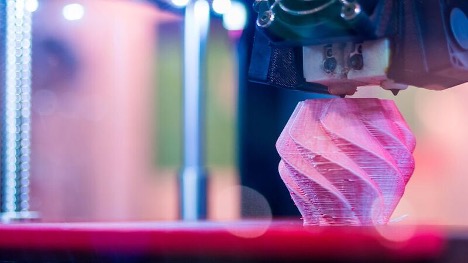
La impresión 3D, también conocida como fabricación aditiva, está siendo adoptada como una técnica de fabricación versátil en diversos sectores. La impresión 3D permite la creación rápida de prototipos y soluciones de impresión bajo demanda para evitar el posible desperdicio asociado a las tiradas por lotes.