How to Import TAM Titration Data into NanoAnalyze
Overview In this Tech Tip, we will learn how to import TAM Titration data into NanoAnalyze.
Details

Overview In this Tech Tip, we will learn how to import TAM Titration data into NanoAnalyze.
DetailsSuccessful additive manufacturing products depend upon your materials’ properties and behaviors. Rheology provides valuable information for safe, efficient, and reproducible polymer manufacturing.
DetailsGene therapy is an approach to disease treatment where a patient’s genetic makeup is altered rather than using drugs or surgery. Gene therapy treatment is accomplished through the activation of a particular gene, repairing faulty genes, or introducing new genes to help fight disease.
DetailsIn this Tech Tip, we will overview the TRIOS Kinetics Software Package, available as an add-on to our standard TRIOS software from TA Instruments.
DetailsAs lithium-ion battery technology evolves, reducing production costs has become a top priority for manufacturers and researchers alike. Lower costs not only make batteries more accessible for consumer electronics and electric vehicles but also enhance the viability of renewable energy storage solutions like solar and wind.
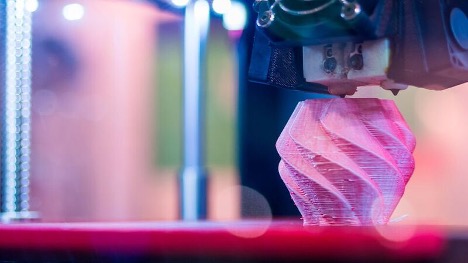
Details3D printing, also known as additive manufacturing, is being embraced as a versatile manufacturing technique across diverse industries. 3D printing allows for rapid prototyping and print-on-demand solutions to avoid the potential waste associated with batch runs.
DetailsFrom lightweight laptops to cross-country EV driving, countless applications require increasing lithium-ion batteries’ energy density and performance. Since battery electrodes directly contribute to these aspects of battery function, electrodes and their components are of particular interest to battery researchers seeking to advance technology to the next level. Battery slurry processing is also a key step of manufacturing, offering significant opportunities to increase efficiency while reducing cost.
DetailsLyophilization, also called freeze-drying, is the process of removing water from a sample, often for preservation. Lyophilization involves the sublimation of a sample’s water content, usually through a rapid freezing process. Freezing materials quickly helps avoid the destruction of the cell walls in the sample from the formation of large ice crystals.
DetailsIn this Tech Tip, we will overview the TRIOS Kinetics Software Package, available as an add-on to our standard TRIOS software from TA Instruments.
Details