View allAdhesives & SealantsAerospace / MilitaryAerospace, Military, & DefenseApplication NotesApplicationsArchiveARES AccessoriesARES RheometerAsphaltAutomated Density TesterAutomated Hardness TesterBatteriesBatteries & Battery MaterialsBatteriesBiopharmaBiopharmaceuticalsBlog ApplicationsBlog Techniquescardiovascular instrumentsCase StudiesCement & ConcreteCeramicsCompositesCompositesDeclarations of ConformityDHR AccessoriesDifferential Scanning CalorimetersDifferential Scanning CalorimetryDilatometersDilatometers Support DocumentsDilatometryDilatometryDilatometryDiscovery Hybrid RheometersDraftsDynamic Mechanical Analysis (DMA)Dynamic Mechanical AnalyzersDynamic Mechanical Analyzers (DMA)Dynamic Mechanical Analyzers (Rheology)Dynamic Mechanical Analyzers (Thermal Analysis)ElastomersElectroForceMechanical TestingElectroForce NotesElectroForceElectroForceElectroForceElectronic Materials & ProductsElectronicsEnd of Life ProductsEngineered MaterialsFilms & FibersFine & Specialty ChemicalsFlash Diffusivity SystemsFlash DiffusivityFlash DiffusivityFood ProductsGeneralGlass ProductsGuarded heat flow meterHigh Pressure AnalyzersHigh Throughput DSCHorizontal DilatometersIn-Person TrainingInorganics - OtherInorganics - MineralsInstallation GuidesInsulation & Building MaterialsIsothermal CalorimetryIsothermal Titration CalorimetryLaser FlashLoad frame systemsMaterial CharacterizationMechanical Testers Support DocumentsMechanical TestingMechanical TestingMedical Device TestingMedical DevicesMedical DevicesMetals ProductsMicrocalorimeters Support DocumentsMicrocalorimetryMicrocalorimetryMicrocalorimetryMicrocalorimetryMicrocalorimetry NotesMicrocalorimetryMooney ViscometerMoving Die RheometerMulti-Specimen FatigueNews & InfoOils, Lubricants, & FluidsOptical DilatometersOrganic Chemicals & ProductsPaints, Inks, & CoatingsPaints, Inks, & CoatingsPercarbonatesPersonal Care & Household ProductsPetroleum ProductsPharmaceuticalsPharmaceuticalsPolymersPolymersprivateProduct videosProductsPromotionsQ SeriesQuenching DilatometersQuick start guidesRheologyRheologyRheologyRheology AccessoryRheologyRheology NotesRheologyRheometers Support DocumentsRotational ViscometerRubberRubber AccessoriesRubberRubber Process AnalyzersRubberRubber TestingRubber TestingRubber TestingRubber Testing Support DocumentsRubothermSafety InformationSeminarsService VideosSimultaneous Thermal AnalyzerSoftwareSoftware Downloads SupportSoftwareSupportTA Quick Talk VideosTech TipsTestbench and Planar Biaxial systemsTGA AccessoriesThermal AnalysisThermal AnalysisThermal AnalysisThermal Analysis NotesThermal AnalysisThermal Analyzers Support DocumentsThermal ApplicationsThermal ConductivityThermal Conductivity & DiffusivityThermal Conductivity MeterThermal Conductivity Support DocumentsThermal ConductivityThermal ConductivityThermogravimetric AnalysisThermomechanical AnalyzersThermophysical NotesThermophysical Properties NotesTrainingUncategorizedVapor Sorption AnalysisVertical DilatometersVideosDilatometryWebinarsMicrocalorimetryRheologyRubberThermal AnalysisXenon Flash

DIL 806 Optical Dilatometer

This optical dilatometric measurement method used in DIL 806 is an absolute process, entirely independent of any possible expansion or contraction of the instrument. Consequently, measured results do not need to be corrected or calibrated for different temperature programs. Coupled with the fast response of the DIL806 furnace, this makes the system particular well-suited for the analysis of dynamic processes that involve multiple temperature steps and dynamic heating rates.

Details
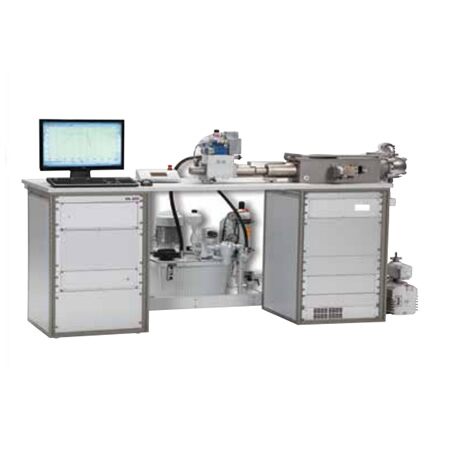
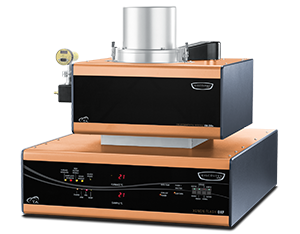
DIL 805A/D Quenching Dilatometers

The DIL805 Series comprises of four models: DIL 805L, DIL 805A are quenching dilatometers, DIL 805A/D is a quenching with the capability to deform the specimen by compression, and DIL 805A/D/T that can also stretch it in tension mode.

All four instruments are fully automated, self-contained units used to measure dimensional changes under extreme conditions of controlled heating and cooling.

Details

DXF 200+

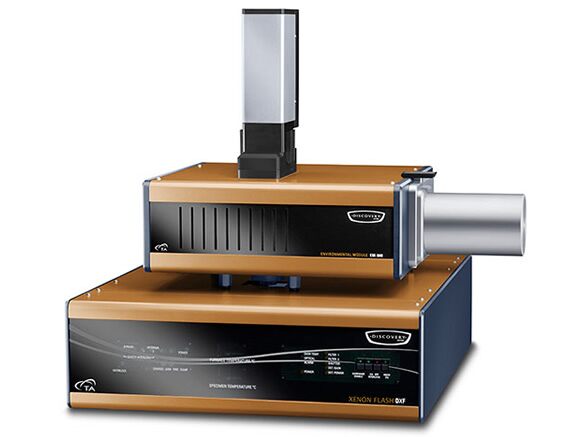
The Discovery Xenon Flash DXF 200 employs a High Speed Xenon-pulse Delivery source (HSXD) with considerably lower cost and less maintenance than a laser and generates equivalent results. A reflective optic configuration of our design effectively harnesses the power of a Xenon flash tube and, with the aid of proprietary wave guides, delivers it to the specimen inside the Environmental Module. DXF 200 produces a pulse width that is shorter (400 μs to 600 μs) than many commercial laser-based systems, while uniformly concentrating sufficient power from the flash source directly on the entire face of the specimen. Due to this optimized optical arrangement and the broad light spectrum, specimens as large as 25 mm in diameter can be illuminated with sufficient energy to make a high-accuracy measurement. The use of large samples diminishes errors associated with inhomogeneity and permits representative measurements of poorly dispersed composites.

Details

DXF 500

The Discovery Xenon Flash (DXF) source module employs a High Speed Xenon-pulse Delivery source (HSXD) which has considerably higher efficiency, lower costs and less maintenance than equivalent systems. A reflective optic configuration of our design effectively harnesses the power of a Xenon flash tube and, with the aid of proprietary wave guides, delivers it to the specimen inside the Environmental Module. DXF 500 produces a pulse width of 400 μs to 600 μs and uniformly concentrates the power from the flash source directly on the entire face of the specimen. Due to this optimized optical arrangement and the broad light spectrum, specimens as large as 25 mm in diameter can be illuminated with sufficient energy to make a high-accuracy measurement. The use of large samples diminishes errors associated with inhomogeneity and permits representative measurements of poorly dispersed composites.

Details

DXF 900

The Discovery Xenon Flash (DXF) source module employs a High Speed Xenon-pulse Delivery source (HSXD) which has considerably higher efficiency, lower costs and less maintenance than equivalent systems. A reflective optic configuration of our design effectively harnesses the power of a Xenon flash tube and, with the aid of proprietary wave guides, delivers it to the specimen inside the Environmental Module. DXF 900 produces a pulse width of 400 μs to 600 μs and uniformly concentrates the power from the flash source directly on the entire face of the specimen. Due to this optimized optical arrangement and the broad light spectrum, specimens as large as 25 mm in diameter can be illuminated with sufficient energy to make a high-accuracy measurement. The use of large samples diminishes errors associated with inhomogeneity and permits representative measurements of poorly dispersed composites.

Details

DLF 1200

The Discovery Laser Flash DLF 1200 employs a custom Class 1 Nd:Glass Laser pulse source to provide a collimated, monochromatic energy pulse with a 300 μs to 400 μs pulse width. Ideal for labs that need to measure thermal diffusivity, heat capacity or thermal conductivity at temperatures up to 1200°C, or require the power of a laser in a compact benchtop instrument.

Equipped with a liquid nitrogen-cooled IR detector, DLF 1200 provides high precision, quick response, non-contact measurements in air, inert gas or vacuum to 10-3 torr. Simple to operate and safe to use, easy to maintain and very economical to operate, these systems are suitable for research and development programs, as well as quality control.

Details

TAM IV

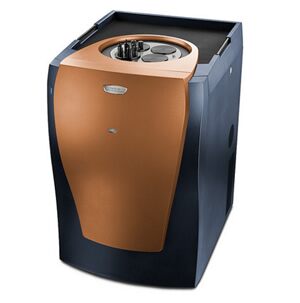
TAM IV is the most sensitive, stable and flexible microcalorimeter system in the world for directly measuring this universal heat signal and, therefore, the quantitative thermodynamic and kinetic observation of any process. It is a unique microcalorimeter system that is completely modular and combines the highest heat flow sensitivity with unmatched long term temperature stability for measuring many processes that are undetectable by other techniques. A wide range of calorimeter configurations and sample handling systems provide maximum application flexibility and ensure optimum laboratory productivity.

Details

ElectroForce DMA 3200 High Force DMA

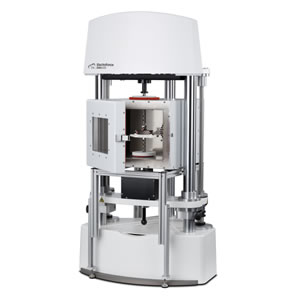
DMA 3200 High Force DMA The DMA 3200 combines decades of cutting-edge fatigue and world-leading Dynamic Mechanical Analysis technologies into a unique and highly versatile testing platform. The patented, frictionless Electroforce® motor technology, superior mechanical design, efficient environmental control, and wide variety of clamping systems deliver superior data accuracy for the broadest range of applications.   Description Specs Technology Clamping Systems Software Applications…

Details

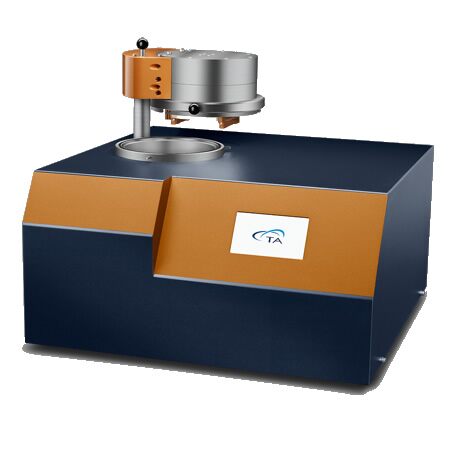
Scarabaeus Software

Scarabaeus Software Instrument Control and Data Analysis The Scarabaeus Software for instrument control and data analysis is a powerful and versatile system for programming experiments, providing quick feedback of results, and managing data from all rubber testing instruments. The Scarabaeus Software was developed with customers from the rubber industry and is designed to meet the…

Details

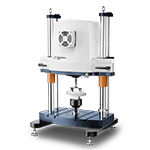
ElectroForce 3200

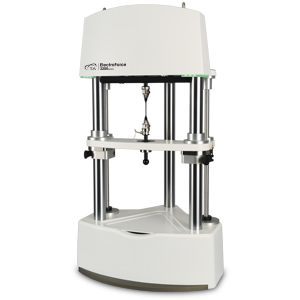
The ElectroForce® 3200 Series III test instruments feature a 225 N (450 N optional) maximum force. With the versatility of static to 300 Hz frequency response, the table-top configuration is adaptable to a variety of biomedical research and engineered materials test applications, including torsion testing, creep under dynamic loading and special environments (hot/cold chambers).

Details

ElectroForce 3300

ElectroForce Series II 3300 test instruments are well-suited for a variety of tests that include ASTM and ISO standards for medical devices, materials characterization, and long-term durability tests. The ElectroForce 3300 series includes two test instruments; the ElectroForce 3310 provides 1000 N of maximum force while the ElectroForce 3330 provides 3000N. Both test instruments can perform tests that range from one cycle per day (or static tests) up to 100 Hz Select the force capacity that is appropriate for your testing needs.

Details

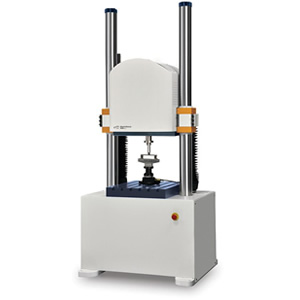
ElectroForce 3500

ElectroForce 3500 test instruments are available in three base system configurations. The 3510 instrument, rated at 7.5 kN, is configured with the linear motor installed in the upper crosshead, making it well-suited for applications requiring a temperature-controlled bath. The 3520 instrument is rated at 7.5 kN, and the linear motor is installed in the lower baseplate. The 3550 instrument is a higher-force configuration rated at 15 kN.

Details