View allAdhesives & SealantsAerospace / MilitaryAerospace, Military, & DefenseApplication NotesApplicationsArchiveARES AccessoriesARES RheometerAsphaltAutomated Density TesterAutomated Hardness TesterBatteriesBatteries & Battery MaterialsBatteriesBiopharmaBiopharmaceuticalsBlog ApplicationsBlog Techniquescardiovascular instrumentsCase StudiesCement & ConcreteCeramicsCompositesCompositesDeclarations of ConformityDHR AccessoriesDifferential Scanning CalorimetersDifferential Scanning CalorimetryDilatometersDilatometers Support DocumentsDilatometryDilatometryDilatometryDiscovery Hybrid RheometersDraftsDynamic Mechanical Analysis (DMA)Dynamic Mechanical AnalyzersDynamic Mechanical Analyzers (DMA)Dynamic Mechanical Analyzers (Rheology)Dynamic Mechanical Analyzers (Thermal Analysis)ElastomersElectroForceMechanical TestingElectroForce NotesElectroForceElectroForceElectroForceElectronic Materials & ProductsElectronicsEnd of Life ProductsEngineered MaterialsFilms & FibersFine & Specialty ChemicalsFlash Diffusivity SystemsFlash DiffusivityFlash DiffusivityFood ProductsGeneralGlass ProductsGuarded heat flow meterHigh Pressure AnalyzersHigh Throughput DSCHorizontal DilatometersIn-Person TrainingInorganics - OtherInorganics - MineralsInstallation GuidesInsulation & Building MaterialsIsothermal CalorimetryIsothermal Titration CalorimetryLaser FlashLoad frame systemsMaterial CharacterizationMechanical Testers Support DocumentsMechanical TestingMechanical TestingMedical Device TestingMedical DevicesMedical DevicesMetals ProductsMicrocalorimeters Support DocumentsMicrocalorimetryMicrocalorimetryMicrocalorimetryMicrocalorimetryMicrocalorimetry NotesMicrocalorimetryMooney ViscometerMoving Die RheometerMulti-Specimen FatigueNews & InfoOils, Lubricants, & FluidsOptical DilatometersOrganic Chemicals & ProductsPaints, Inks, & CoatingsPaints, Inks, & CoatingsPercarbonatesPersonal Care & Household ProductsPetroleum ProductsPharmaceuticalsPharmaceuticalsPolymersPolymersprivateProduct videosProductsPromotionsQ SeriesQuenching DilatometersQuick start guidesRheologyRheologyRheologyRheology AccessoryRheologyRheology NotesRheologyRheometers Support DocumentsRotational ViscometerRubberRubber AccessoriesRubberRubber Process AnalyzersRubberRubber TestingRubber TestingRubber TestingRubber Testing Support DocumentsRubothermSafety InformationSeminarsService VideosSimultaneous Thermal AnalyzerSoftwareSoftware Downloads SupportSoftwareSupportTA Quick Talk VideosTech TipsTestbench and Planar Biaxial systemsTGA AccessoriesThermal AnalysisThermal AnalysisThermal AnalysisThermal Analysis NotesThermal AnalysisThermal Analyzers Support DocumentsThermal ApplicationsThermal ConductivityThermal Conductivity & DiffusivityThermal Conductivity MeterThermal Conductivity Support DocumentsThermal ConductivityThermal ConductivityThermogravimetric AnalysisThermomechanical AnalyzersThermophysical NotesThermophysical Properties NotesTrainingUncategorizedVapor Sorption AnalysisVertical DilatometersVideosDilatometryWebinarsMicrocalorimetryRheologyRubberThermal AnalysisXenon Flash

New Waters Discovery Core Rheometer Brings the Power of Rheology to Routine Quality Control Testing

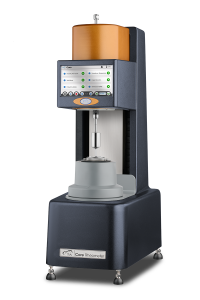
Detroit, Mich. – The Battery Show – October 8, 2024 – Waters Corporation (NYSE:WAT) today introduced the TA Instruments™ Discovery Core Rheometer, a simple, modern, entry-level rheometer designed for manufacturing quality control and assurance laboratories. The new analyzer can handle multiple material types such as battery slurries, printing inks, food, and personal care products and it features an easy-to-use touchscreen interface with self-guided training, methods, and applications for all levels of rheology users.

Details

Thermal Stability Technology Selection Guide for Biotherapeutic Drug Development

eBook Thermal Stability Technology Selection Guide for Biotherapeutic Drug Development A guide to automated biologics stability testing for ensuring product quality and supporting regulatory approvals How to choose a thermal stability screening solution for your workflow Thermal stability testing is a mandatory step in biotherapeutic development. Regulations require stability studies to prove biotherapeutics’ safety and…

Details

How to Accelerate Successful Product Development with Rheology

Rheology is a notoriously complex field, combining mathematics and physics to characterize materials. For inexperienced users, rheology can seem like a massive challenge. Luckily, new technology simplifies rheology down to its core so you can get essential measurements without difficult training, measurements, or calculations.

Details

Analytical Instruments for Optimizing Polymer Processing

White Paper Analytical Instruments for Optimizing Polymer Processing Processing conditions can influence a polymer’s performance as much as its chemical formulation. The material’s thermal and shearing history and its fillers, fibers, stabilizers, or other additives help determine many of its properties. Laboratory analysis can help optimize polymer processing conditions, diagnose issues in an existing process,…

Details

Rheology is Maza: Unveiling the Secrets of Flowing Rangoli Colors

Powders are a big part of everyday life, from baking and laundry to cosmetics and pharmaceuticals. Understanding powder rheology—how powders flow and deform—is crucial for optimizing their use in various applications. This knowledge helps industries maintain consistency and product quality.

Details

What is Thermogravimetric Analysis?

A testament to the march of scientific inquiry, thermogravimetry emerged through the integration of three individual inventions in the 19th and 20th centuries: the electric furnace, the thermocouple, and the microbalance. As a cornerstone of material science, chemistry, and various other industries, thermogravimetric analysis (TGA) has since developed in leaps and bounds. Today, TA Instruments are leading the way in TGA, and we welcome you to join us as we explore the workings and applications of this groundbreaking technique.

Details

What is Isothermal Microcalorimetry (IMC)?

Isothermal Microcalorimetry (IMC) is a highly sensitive analytical technique that measures the heat flow in chemical and physical processes under constant temperature. IMC enables the precise detection of thermal reactions, including phase transitions, binding events, and metabolic processes, making it invaluable in fields such as pharmaceuticals, materials science, and battery research.

Details