

10 Questions to Ask Yourself for Successful DSC Use
And the Resources You Need to Answer Them!
Andy Malec | Jeffrey Marvin
November 27, 2024
Differential Scanning Calorimetry is a thermal analysis technique commonly used to characterize materials across a broad array of applications including chemistry, biochemistry, pharmaceuticals, polymers, and more. Differential Scanning Calorimetry (DSC) measures the heat flow in a material as it is heated or cooled over a specified temperature range.
The heat flow of a material in response to temperature or chemical changes is critical to understanding suitability for specific applications. For example, a polymer’s transition temperatures will determine its operational range, and a pharmaceutical’s structure changes can impact its bioavailability, ideal processing conditions, and shelf life.
Reliable DSC data can make or break successful product development, processing, and performance. Learn how to avoid common mistakes and maximize the value of your DSC with these helpful tips and resources from TA Instruments.
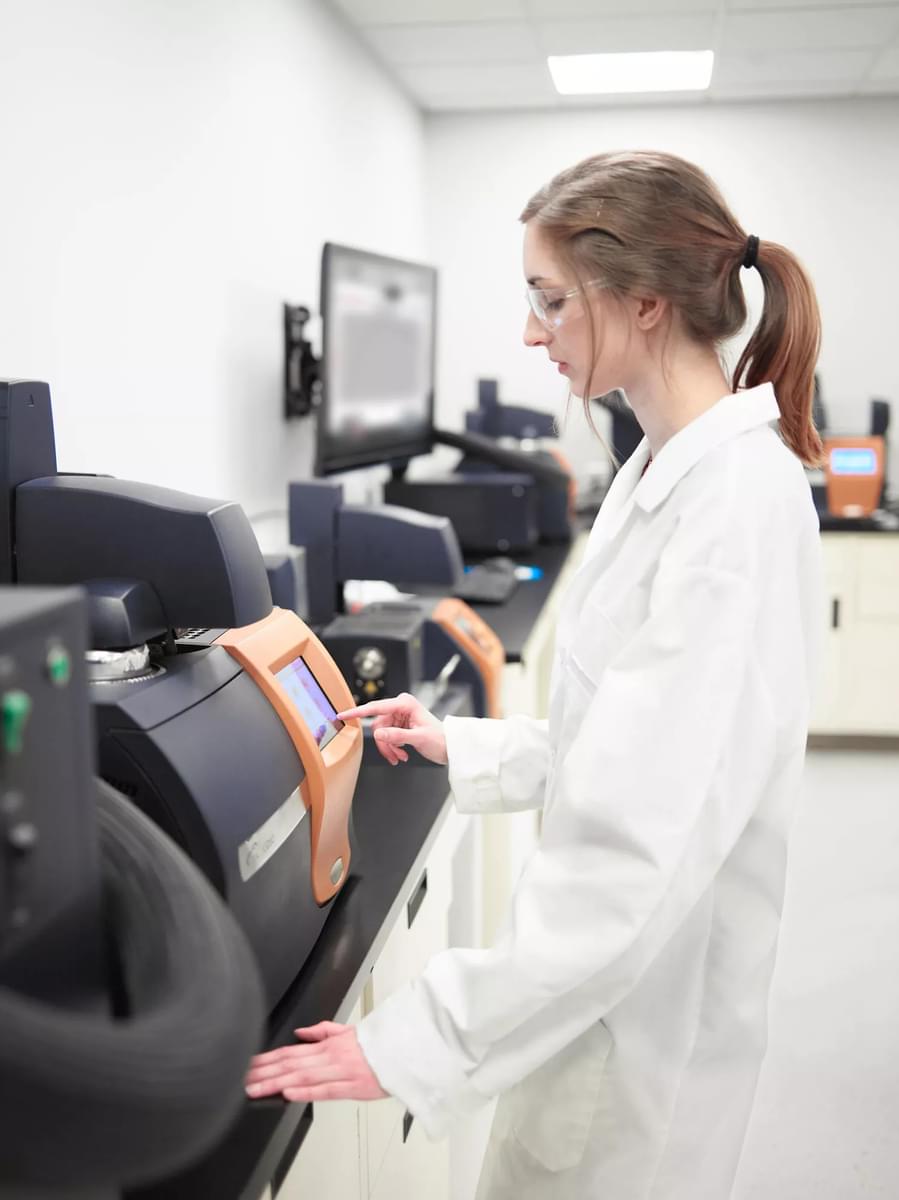
1. Sample Type and Measurement: What information are you looking to extract from sample testing?
DSC measures various properties, including melting points, crystallization, and glass transitions. Define the specific data you want to obtain before setting up your test to select the right conditions for optimal results. Clear goals prevent time-consuming re-analysis and ensure meaningful insights aligned with your research or production requirements.
- Check the applications note library: https://www.tainstruments.com/applications-notes/
- Watch the Theory & Applications Training (support plan required) https://www.tainstruments.com/recorded-theory-applications-training/
2. Instrument Setup and Maintenance: Have you ensured proper installation and maintenance of your instrument to achieve optimal performance?
A well-maintained instrument is essential for accuracy and reliability. Issues like poor calibration or residue buildup can impact results, leading to costly inaccuracies or misinterpretations. Regular maintenance and calibration protect your investment and ensure data integrity. We recommend touching base with your service representative and reviewing TechTips for best practices.
- Follow detailed calibration guides by clicking “Help” in TRIOS
- TechTip: Indium (cell constant/temp): https://www.youtube.com/watch?v=DlvTlRW0IHA
- TechTip: Reversing heat capacity: https://www.youtube.com/watch?v=EtHCrGyLd3g
- TechTip: Tzero (X3): https://www.youtube.com/watch?v=EtLVNDsFKLU
- Cleaning the DSC cell: https://www.youtube.com/watch?v=cclJXrbUICA
3. Advanced Features: How can you deepen your understanding of your instrument and stay updated on the latest technological advancements?
Understanding the advanced features on your instrument unlocks a superior level of testing. TA continuously adds new features and software updates that improve accuracy, efficiency, and data interpretation. Follow TA on social media and check our TechTips to stay up to date on new capabilities and updates.
- Learn about the latest DSC and TRIOS features at TATechTips: https://www.youtube.com/@TATechTips/videos
- Recent highlights: JSON Export (https://www.youtube.com/watch?v=RalJL-mHFlQ), EasyMass (https://www.youtube.com/watch?v=6qTrWZFZfsg)
4. Sample Preparation: Are you set up for success with optimal sample preparation?
Proper sample preparation is essential for reliable results, preventing issues like sample degradation or incomplete transitions. Understanding sample prep procedures reduces errors and ensures that DSC data reflects true material properties.
- Pan loading and crimping:
- Tzero hermetic (https://www.youtube.com/watch?v=YGxXuzCzQuw)
- Tzero (https://www.youtube.com/watch?v=-2xUfUp2je4)
- Helpful tools
- Powder Sample Prep tool: https://www.youtube.com/watch?v=X3Mh_ZZja98
- Sample Cutting Kit: https://www.youtube.com/watch?v=Daz1JvxARno
5. Experiment Conditions: Have all methods been considered to optimize experiment conditions?
Different materials require different experimental parameters. For example, polymers or biological samples may need tailored heating rates or modulated DSC (MDSC) to reveal detailed properties. Optimizing conditions helps capture comprehensive data, making sure your DSC setup matches your analysis goals.
- Learn about MDSC, the most powerful DSC tool for advanced analysis: App Note TP006 https://www.tainstruments.com/pdf/literature/TP_006_MDSC_num_1_MDSC.pdf
- Optimize MDSC: (https://www.tainstruments.com/pdf/literature/TP_008_MDSC_num_3_Optimization_of_Experimental_Conditions.pdf)
- Recorded theory and apps training (above) for full training
6. Interpreting Complex Events: Are you prepared to confidently manage complex and overlapping events?
Complex thermal events, like overlapping transitions or reactions, can be challenging to interpret. MDSC and other advanced DSC techniques help distinguish these events, giving clearer insights.
- App note (“Using Modulated DSC® (MDSC®) to Separate an Enthalpic Recovery from a Glass Transition”): https://www.tainstruments.com/pdf/literature/TA433.pdf
- App note (“Characterization of an Epoxy Resin Compound by MDSC®”): https://www.tainstruments.com/applications-notes/characterization-of-an-epoxy-resin-compound-by-mdsc/
- App notes, polymer blends:
7. Data analysis: Have you explored all the shortcuts and automations TRIOS offers to enhance your efficiency?
TRIOS software offers tools that can simplify data analysis, like batch processing or automated transition detection, which can save time and reduce errors. Leveraging these features streamlines workflows, enabling more consistent data processing.
- TRIOS Intelligent Analysis: https://www.youtube.com/watch?v=BuHxJLP-W24
- TRIOS batch processing: https://www.youtube.com/watch?v=WHPljulYH3w
8. Analyzing transition data: Are you prepared to analyze and adapt to unexpected events and transitions?
DSC data can reveal unexpected thermal events, such as impurities or new phase transitions. Being equipped to recognize and interpret these allows for better understanding of the material and prevents oversight of critical data.
- App note (“Interpreting Unexpected Events and Transitions in DSC Results”): https://www.tainstruments.com/pdf/literature/TA039.pdf
9. Avoiding sample degradation: Have you taken all the necessary steps to prevent sample degradation?
Sample degradation can skew DSC data, making results unreliable. Following protocols, like controlling upper temperature limits and cleaning the instrument, helps avoid this issue and prevents inaccurate results.
- Cleaning: https://www.youtube.com/watch?v=cclJXrbUICA
- Help with selecting an upper temperature limit: DSC Guided Method includes auto-analysis of TGA data (https://www.youtube.com/watch?v=VY8Ar6bTUh4)
10. Training: Have you made the most of the available training opportunities?
TA Instruments offers numerous training courses ranging from DSC fundamentals to advanced applications throughout the year. Proper training empowers users to get the best results and troubleshoot issues independently. Taking advantage of training opportunities ensures you will get the most out of your DSC.
- Free In-Person Training Seminars (TA Instruments Headquarters: New Castle, DE) https://www.tainstruments.com/usa-training-schedule/
- Worldwide course schedule: https://www.tainstruments.com/course-schedule/
- Virtual Training: https://www.tainstruments.com/virtual-training/
- https://www.tainstruments.com/recorded-theory-applications-training/ is an excellent starting point for a strong foundation of practical and theoretical DSC knowledge
- TRIOS Software Training Guide: https://www.youtube.com/watch?v=pxaRNQKbsWc
Other Resources
- Application Note – TA Instruments Discovery DSC X3®: Three-fold Improvement in the Efficiency of the Nonisothermal Crystallization Kinetics Experiment
- Application Note – Semi-Crystalline Thermoplastic Analysis Using the Discovery X3 DSC
- Application Note – DSC Analysis of a Polyhydroxybutyrate (PHB) with Wood Flour
- Webinar – DSC Characterization of Crystalline Structure in Foods and Pharmaceuticals
- Blog – What is Differential Scanning Calorimetry?
- Instruments – Differential Scanning Calorimeters